Il ripasso di grammatica inglese di oggi è dedicato ai tanto discussi verbi irregolari, odiati e temuti dagli studenti, perché sono quei verbi con cui è facile sbagliarsi.
Lo studio e la pratica aiutano a memorizzare i principali verbi, ma la pratica deve essere costante: più ne incontrerai giornalmente e più ne imparerai fino a ricordarli tutti!
I Verbi Irregolari
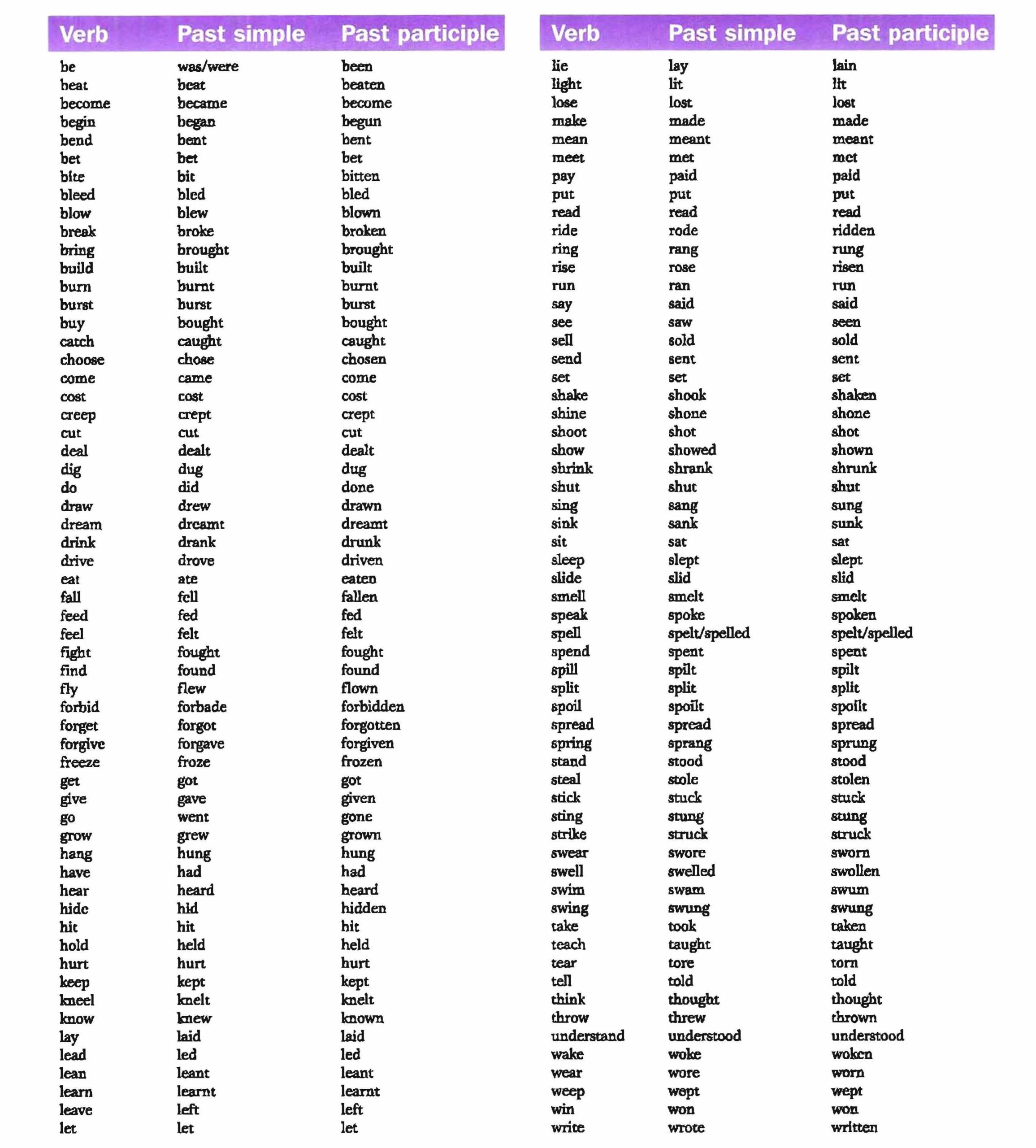 I verbi irregolari sono quei verbi che hanno una “forma tutta loro” di esprimersi nei vari tempi.
Devi sapere che i verbi regolari, in realtà, un minimo di struttura per capirli e comprenderli meglio ce l’hanno!
Ora andremo a dividere i vari casi possibili dei verbi irregolari, in modo da rendere più semplice il modo di riconoscerli ed identificarli.
Verbi che cambiano solo al passato
| PRESENT | PAST | PAST PARTICIPLE |
| come | came | come |
| become | became | become |
| run | ran | run |
I seguenti verbi terminano tutti con la lettera -n al Participio Passato.
Ogni gruppo ha delle particolarità con cui andremo a suddividere questi verbi.
Con la lettera -o al Passato e al Participio Passato
| PRESENT | PAST | PAST PARTICIPLE |
| break | broke | broken |
| choose | chose | chosen |
| forget | forgot | forgotten |
| freeze | froze | frozen |
| get | got | gotten |
| speak | spoke | spoken |
| steal | stole | stolen |
| tear | tore | torn |
| wake | woke | woken |
| wear | wore | worn |
Con la lettera -o solo al Passato
| PRESENT | PAST | PAST PARTICIPLE |
| drive | drove | droven |
| ride | rode | ridden |
| rise | rose | risen |
| write | wrote | written |
Il Passato ternima con -ew, il Participio Passato con -own
| PRESENT | PAST | PAST PARTICIPLE |
| blow | blew | blown |
| fly | flew | flown |
| grow | grew | grown |
| know | knew | known |
| throw | threw | thrown |
Altri irregular verbs che teminano con -n al Participio Passato
| PRESENT | PAST | PAST PARTICIPLE |
| bite | bit | bitten |
| hide | hid | hidden |
| eat | ate | eaten |
| fall | fell | fallen |
| forbid | forbade | forbidden |
| forgive | forgave | forgiven |
| give | gave | given |
| see | saw | seen |
| shake | shook | shaken |
| take | took | taken |
La -e “lunga” diventa -e “corta”
| PRESENT | PAST | PAST PARTICIPLE |
| keep | kept | kept |
| sleep | slept | slept |
| feel | felt | felt |
| bleed | bled | bled |
| feed | fed | fed |
| meet | met | met |
| lead | led | led |
La pronuncia di -ea cambia nel Passato e nel Participio Passato
| PRESENT | PAST | PAST PARTICIPLE |
| deal | dealt | dealt |
| dream | dreamt | dreamt |
| mean | meant | meant |
| read | read | read |
| feed | fed | fed |
| hear | heard | heard |
La -i “lunga” diventa -ou nel Passato e nel Participio Passato
| PRESENT | PAST | PAST PARTICIPLE |
| bind | bound | bound |
| find | found | found |
| grind | ground | ground |
| wind | wound | wound |
La -i “corta” diventa -u nel Passato e nel Participio Passato
| PRESENT | PAST | PAST PARTICIPLE |
| dig | dug | dug |
| stick | stuck | stuck |
| spin | spun | spun |
| sting | stung | stung |
| swing | swung | swung |
-ell diventa -old
| PRESENT | PAST | PAST PARTICIPLE |
| sell | sold | sold |
| tell | told | told |
Irregular verbs che terminano in -ought e -aught
| PRESENT | PAST | PAST PARTICIPLE |
| bring | brought | brought |
| buy | bought | bought |
| catch | caught | caught |
| fight | fought | fought |
| seek | sought | sought |
| teach | taught | taught |
| think | thought | thought |
Infine, quelli che cambiano in tutte e tre le forme!
Questi irregular verbs cambiano vocali in tutte e tre le forme
La vocale cambia da -i a -a a -u
| PRESENT | PAST | PAST PARTICIPLE |
| begin | began | begun |
| drink | drank | drunk |
| ring | rang | rung |
| shrink | shrank | shrunk |
| sing | sang | sung |
| sink | sank | sunk |
| spring | sprang | sprung |
| swim | swam | swum |
Ed ecco i verbi irregolari per eccellenza, quelli in cui cambia tutto senza una logica precisa.
Occorre memorizzarli e basta
| PRESENT | PAST | PAST PARTICIPLE |
| be | was/were | been |
| do | did | done |
| go | went | gone |
| have | had | had |
| make | made | made |
Past Simple
Vediamo, da ultimo, come si forma il past simple in inglese nelle sue varie forme:
Affermativa
| Soggetto | + verbo + ed |
| I | arrived. |
Negativa
| Soggetto | + did not | + forma base del verbo |
| They | didn’t | go. |
Interrogativa
| Did | + soggetto | + forma base del verbo |
| Did | she | arrive? |
Interrogativa negativa
| Did not | + soggetto | + forma base del verbo |
| Didn’t | you | play? |
Il prossimo articolo darà dedicato ad altri elementi chiave del discorso e della costruzione delle frasi.
Come sempre, seguiteci in questo ripasso di grammatica inglese base ed è obbligatorio mettere mi piace alle nostre pagine social, in particolare Facebook!
Stay tuned!